

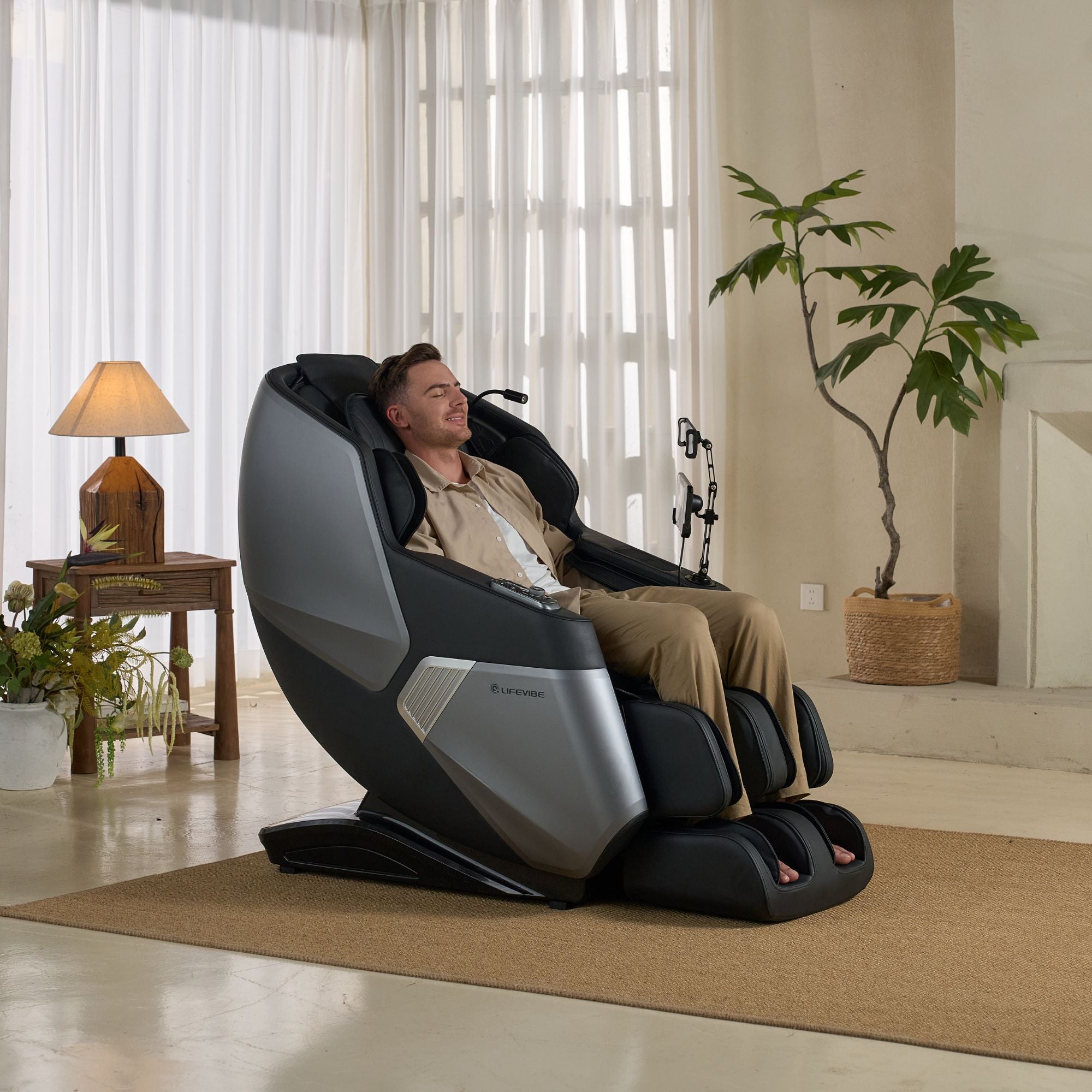
If you’ve ever used a traditional massage chair, you already know the feeling: rollers moving up and down your back, airbags squeezing your arms and legs, maybe a bit of heat in the lower back. It can feel good — sometimes very good — but it’s also very mechanical. You feel where the chair touches you. You feel the pressure. You feel the movement.
A vibroacoustic therapy (VAT) massage chair works in a completely different way. Instead of only working on your body, it works with your body — using low-frequency sound waves, rhythm and synchronized movement to create relaxation from the inside out.
And that difference changes everything.

Below is why a vibroacoustic therapy (VAT) chair, especially one built around systems like SonicWave™ and SonicSync™, goes far beyond what a traditional massage chair can do.
Traditional massage uses external force. Vibroacoustic therapy work through internal resonance.
A traditional massage chair relies mainly on physical force:
Rollers push into your muscles, airbags compress your limbs, and vibration motors shake the surface of your body.
That approach works well for loosening surface tension. But it stays mostly at the outer layer of the body - skin, surface muscle, and the first layer of fascia. To go deeper, the chair usually has to push harder. And harder isn’t always better. For many people it becomes uncomfortable, tiring, or even irritating over time.
Vibroacoustic therapy (VAT) works differently.
It uses low-frequency sound waves (typically between 30–120 Hz) that travel through the body instead of pressing into it. These sound waves create gentle internal vibrations inside muscles, fascia, blood vessels, and even near nerves. Instead of force, it uses frequency. Instead of pressure, it uses resonance.

Two Different Kind of Mechanism
That’s why people often describe vibroacoustic therapy as:
-
deeper, but not harsher
-
more calming, not more intense
-
more full-body, not just point-based
It feels like your body is slowly melting from the inside, rather than being worked on from the outside.
Deeper relaxation without needing more pressure
In a traditional chair, depth usually equals pressure. More depth means stronger rollers, tighter airbags, and more aggressive movement.
With vibroacoustic therapy, depth comes from penetration of sound waves - not mechanical force.
Low frequencies naturally travel deeper into soft tissue than physical pressure can reach comfortably. That’s why vibroacoustic therapy is used in clinical, rehabilitation and wellness settings for stress relief, nervous system regulation, and relaxation support.
The result is:
-
less muscle guarding
-
less “flinch” response
-
less fatigue after a session
You don’t feel worked over. You feel settled.
The body responds better to rhythm than to random movement
Most traditional massage chairs feel like a series of mechanical steps:
roll here, stop, roll there, squeeze, release, repeat.
Vibroacoustic chairs are built around rhythm.
With systems like SonicSync™, sound, vibration, and mechanical movement are aligned on the same timeline. The rollers move in sync with the vibration. The vibration flows in sync with the sound. The sound is shaped for the mental and emotional state the mode is designed for.
That coordination matters more than it sounds.
The human nervous system is extremely sensitive to rhythm. Our breathing, heart rate, attention, and emotional states all follow rhythmic patterns. When a massage follows a coherent rhythm, the body adapts faster and relaxes more naturally.
That’s why vibroacoustic therapy often feels:
-
smoother
-
more immersive
-
less abrupt
-
easier to sink into
It stops feeling like “a machine doing things to you” and starts feeling like “a system carrying you.”
It supports mental and emotional states — not just muscles
Traditional massage chairs are excellent at muscle relief. That’s their job.
Vibroacoustic therapy chairs also support states.
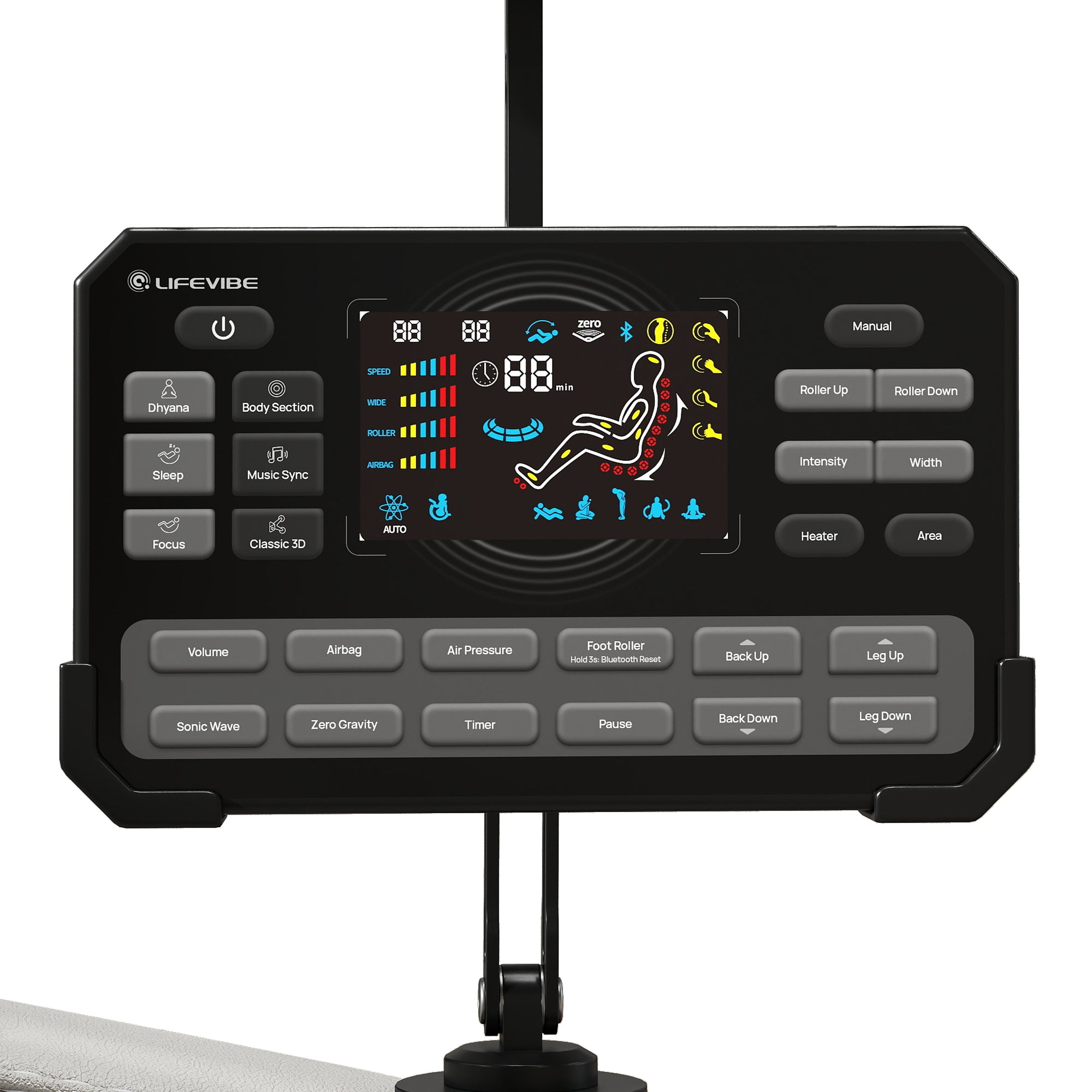
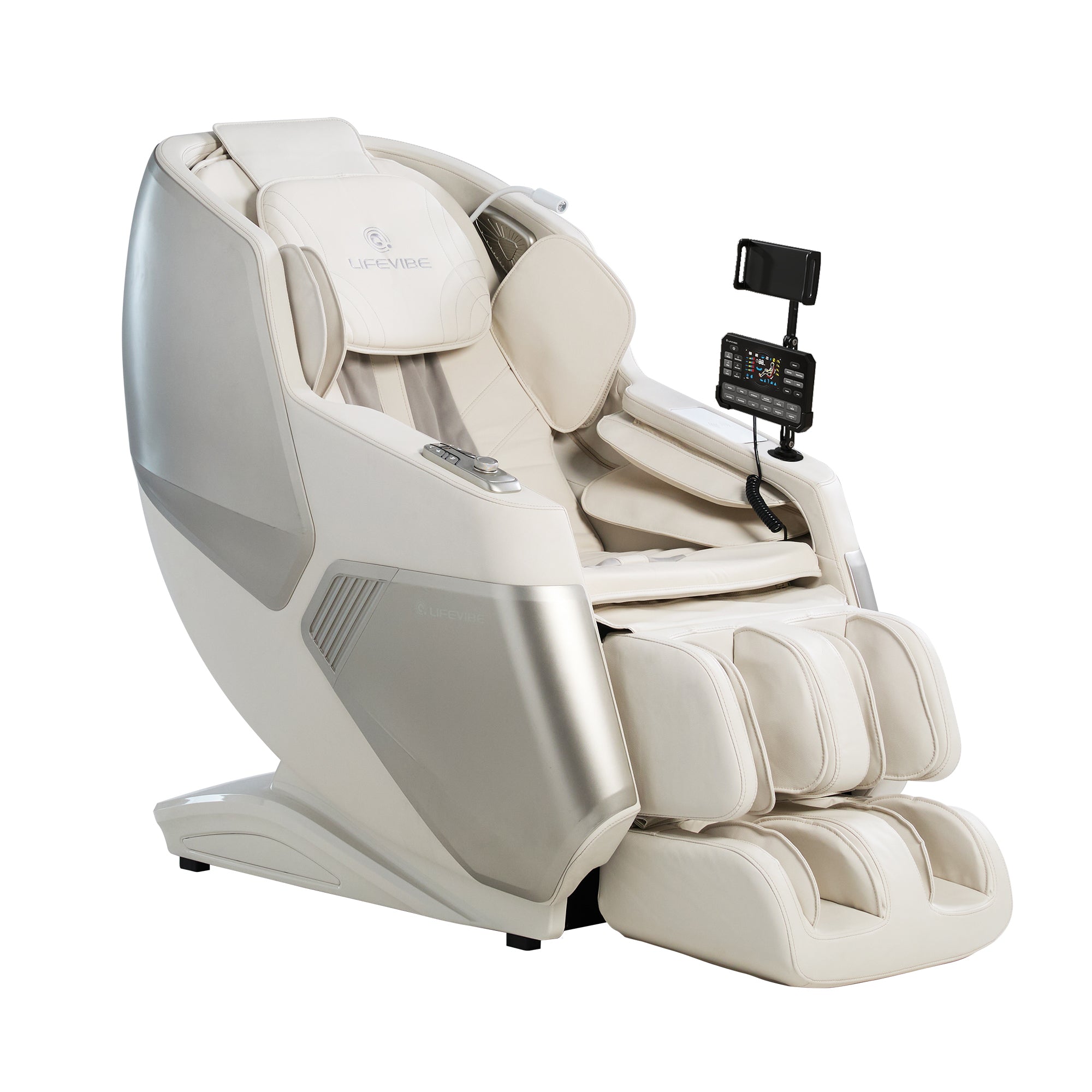
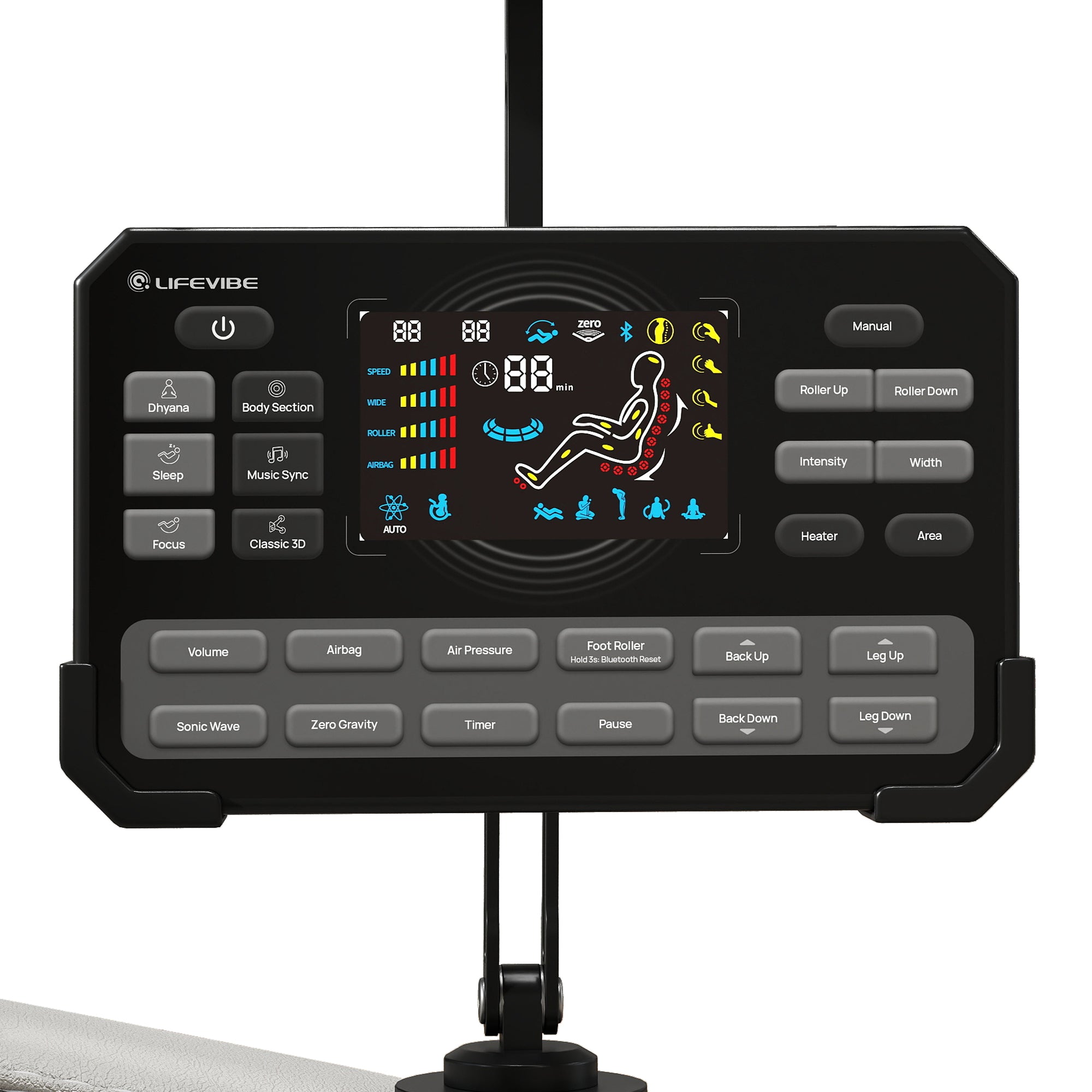
Different frequencies and rhythms influence different parts of the nervous system. That’s why Lifevibe programs include modes like:
-
Dhyana Mode — slow, low-frequency rhythms to calm mental activity and support meditation
-
Sleep Mode — gentle, steady pulses to help the body shift into pre-sleep relaxation
-
Focus Mode — clearer, higher-frequency rhythms to refresh posture and attention without making you sleepy
-
Music Sync Mode — your own music turned into physical rhythm your body can feel

This makes the chair useful not only when your body is sore, but when your mind is tired, overloaded, restless or scattered.
It becomes a daily reset tool — not just a recovery device.
It’s gentler, safer, and easier to use regularly
Because vibroacoustic therapy (VAT) does not rely on strong mechanical force or electrical muscle stimulation, it’s generally:
-
non-invasive
-
low-impact
-
gentle on joints and connective tissue
-
comfortable for sensitive users
-
suitable for longer or more frequent sessions
That makes it easier to use as part of daily life — before bed, during a work break, after a stressful day, or as part of a relaxation ritual — instead of something you only use when you’re already in pain.
It’s designed for maintenance, not just repair.
It feels less like a device and more like an experience
Traditional massage chairs feel like tools.
Vibroacoustic therapy chairs feel like environments.
The combination of soundscapes, synchronized motion, vibration, heat, zero gravity positioning, and airflow creates a sensory space — a little pocket where your body and mind can slow down together.

You’re not just lying in a chair.
You’re entering a rhythm.
That difference is subtle at first. Then you notice that you breathe more deeply. Your shoulders drop without trying. Your thoughts soften. Time feels slower.
That’s not accidental. That’s how resonance works.
So why is vibroacoustic therapy better?
Not because it replaces traditional massage — but because it expands it.
A vibroacoustic therapy chair still gives you rollers, airbags, heat, and stretch.
But it adds:
-
internal resonance
-
rhythm-based coordination
-
nervous system support
-
emotional regulation
-
immersive sensory design
It treats relaxation as a system, not a feature.
And that’s why people who switch to vibroacoustic therapy often don’t go back.
Not because it’s stronger.
Not because it’s more aggressive.
But because it feels more natural, more complete, and more human.
Not just massage.
Resonance.


Share:
Traditional massage vs. sonic wave massage mechanism in massage chairs
How Does Vibroacoustic Therapy (VAT) Work, and Is It Safe for Daily Use?