

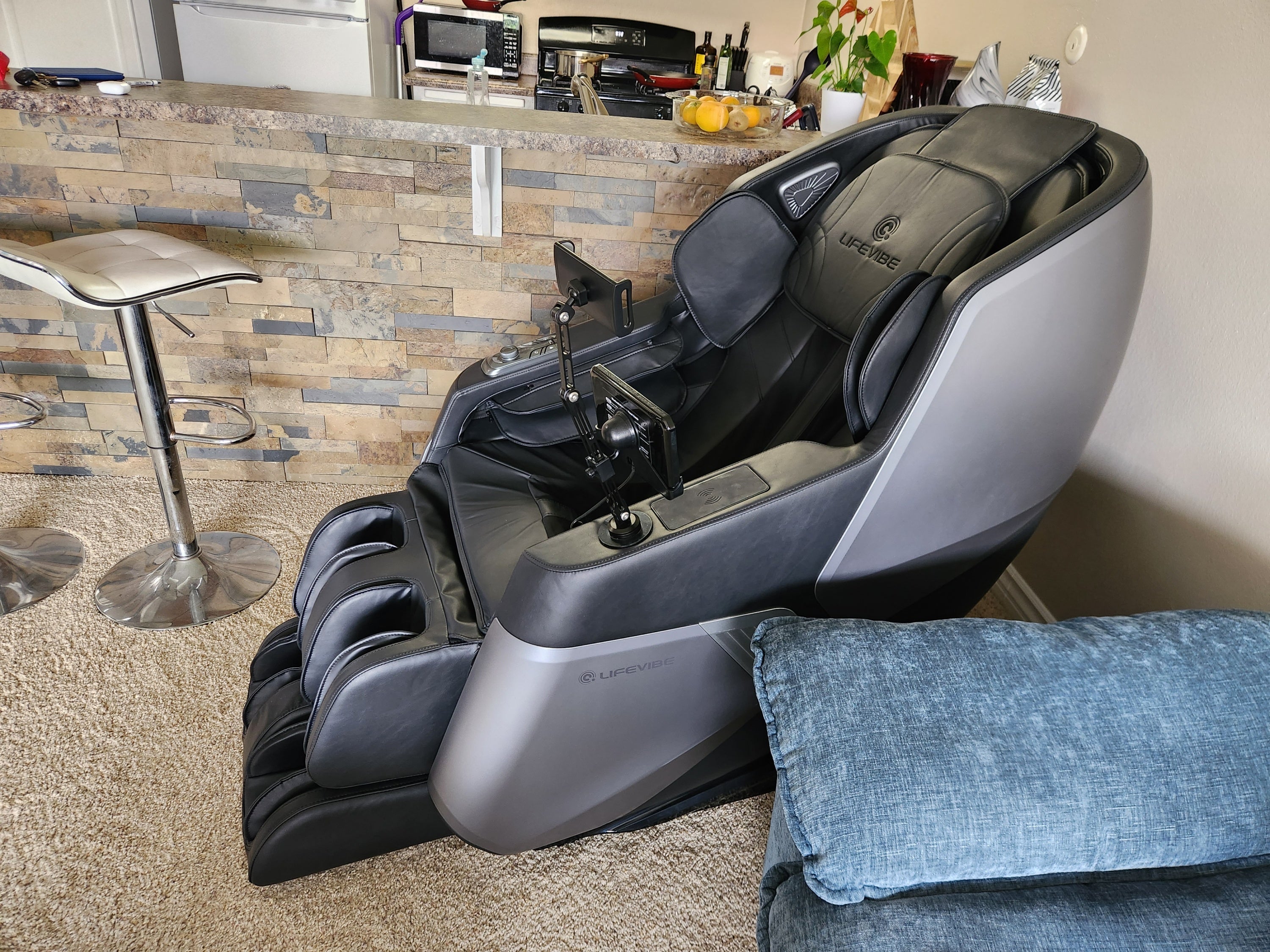
If you’ve ever watched your parents rub their shoulders after a long day, or complain about stiff backs and restless sleep, you’ve probably wondered what kind of gift would actually help—not just something nice, but something they’d use every day.
That’s where a vibroacoustic therapy massage chair comes in. Not just another massage chair, but something built around how the body feels, not just how it’s pressed.
So is it actually a thoughtful gift—or just an expensive gadget that sounds good on paper?
What makes vibroacoustic therapy different?
Most massage chairs people are familiar with rely on pressure. Rollers push into muscles, airbags squeeze different areas, and that’s pretty much the experience.
Vibroacoustic therapy (VAT) works in a completely different way. Instead of focusing on pressure, it uses low-frequency sound waves—usually between 30 and 120 Hz—to create gentle vibrations that travel through the body.
This isn’t just a new trend. It’s been studied for decades. Research compiled by the National Center for Biotechnology Information shows that low-frequency vibration can support relaxation, reduce stress, and even influence how we perceive pain (https://www.ncbi.nlm.nih.gov/pmc/articles/PMC5871151/).
So instead of your muscles being “worked on” from the outside, your body is responding to rhythm from within. It feels less like pressure and more like being guided into a calmer state.
And that difference becomes especially important for parents.
How does low-frequency sonic vibration work on your body vs. traditional massage?
Why parents tend to prefer this kind of massage
As people get older, their tolerance for strong, deep pressure usually changes. What used to feel effective can start to feel uncomfortable or even tiring.
That’s where vibroacoustic therapy stands out. The sensation is much smoother and more evenly distributed, without sharp or overly intense pressure points. It doesn’t demand that the body “endure” anything—it just gradually helps it settle.
According to the British Academy of Sound Therapy, low-frequency sound stimulation is often used to calm the nervous system and support emotional balance (https://www.britishacademyofsoundtherapy.com).
That’s why many people describe the experience as something that helps the body naturally shift into relaxation, instead of forcing it.
For parents dealing with daily stress, poor sleep, or general fatigue, that softer approach usually feels a lot more sustainable.
It’s not just physical relief—it’s a mental reset
What surprises a lot of people is how much of the experience is mental, not just physical.
Because vibroacoustic therapy combines sound, rhythm, and vibration, it can influence how the brain slows down. That’s part of why it’s often associated with meditation or sleep-focused programs.
Research published in Frontiers in Psychology shows that sound-based therapies can affect mood, anxiety, and cognitive states.
So when a chair includes modes designed for sleep, focus, or relaxation, it’s not just marketing language. There’s actually a reason those experiences feel different.
For parents who are constantly thinking, worrying, or multitasking, having something that helps them mentally “switch off” can be just as valuable as relieving muscle tension.


Why it works well as a gift (not just a product)
Some gifts feel exciting at first but don’t really become part of daily life.
This one usually does, because it fits into routines without requiring effort.
Your parents don’t need to plan around it or set aside time in a strict way. They can just use it while watching TV, reading, or listening to music. It becomes something they naturally come back to, not something they have to remember to use.
That’s also why brands like Lifevibe focus so much on making the chair feel like part of the home environment rather than a piece of equipment.
It’s less about “doing a session” and more about creating a moment to slow down.

The Lifevibe approach: more than just vibration
Not all massage chairs with vibration are built the same way.
What brands like Lifevibe are doing differently is integrating multiple elements into one system. Instead of treating vibration as an add-on, they build the experience around it.
Our design combines traditional 3D rollers for surface-level muscle relief with sonic wave components that create deeper, internal resonance. On top of that, systems like SonicSync™ coordinate sound, movement, and vibration so everything follows the same rhythm.
That coordination is actually closer to how vibroacoustic therapy is used in professional settings, where timing and frequency matter just as much as the sensation itself.
Is it suitable for all parents?
It’s not a perfect fit for everyone, and it’s better to be realistic about that.
If your parents only like very strong, deep-pressure massage, they might feel that this kind of experience is too gentle. And of course, if there are specific medical conditions, it’s always safer to check first.
But for a lot of people—especially those dealing with stress, stiffness, or sleep issues—the gentler approach tends to feel more comfortable over time.
It’s something they can use regularly without feeling drained afterward, which is actually what makes it more effective long-term.
What it actually feels like
This part is hard to explain until you try it, but it’s also what people are most curious about.
It doesn’t feel like a massage gun, and it’s not like sitting on a vibrating cushion either.
It’s closer to a slow, steady wave moving through your body. The sensation often matches the rhythm of music or breathing, which makes it feel more natural and less mechanical.
Some people describe it as being surrounded by relaxation instead of being “worked on.” And because it’s not overwhelming, it’s easy to stay in the chair longer without feeling tired or overstimulated.
How you feel when you choose Sleep Mode
So is it a good gift?
If you’re looking for something meaningful, practical, and actually used, then yes—it’s a strong option.
It’s not just about comfort. It’s about giving your parents a simple way to unwind whenever they need it, without having to go anywhere or figure anything out.
It becomes part of their daily routine in a quiet, consistent way.
The bigger picture
There’s been a shift in how people think about relaxation.
It’s no longer just about fixing pain after it shows up. More people are looking for ways to support their body before stress and tension build up.
Vibroacoustic therapy fits naturally into that idea. It’s gentle, consistent, and designed for everyday use.
That’s also why brands like Lifevibe are building entire systems around it instead of treating it as a small feature.
If you’re choosing a gift and want something that actually improves daily life—not just something that looks impressive—this is one of those options that quietly delivers.
And if your parents end up using it every evening without you reminding them, that’s usually the clearest sign you picked something right.
Share:
Vibroacoustic Therapy Chair for Insomnia: Does It Work?
Science Behind Low-Frequency Vibration Massage